
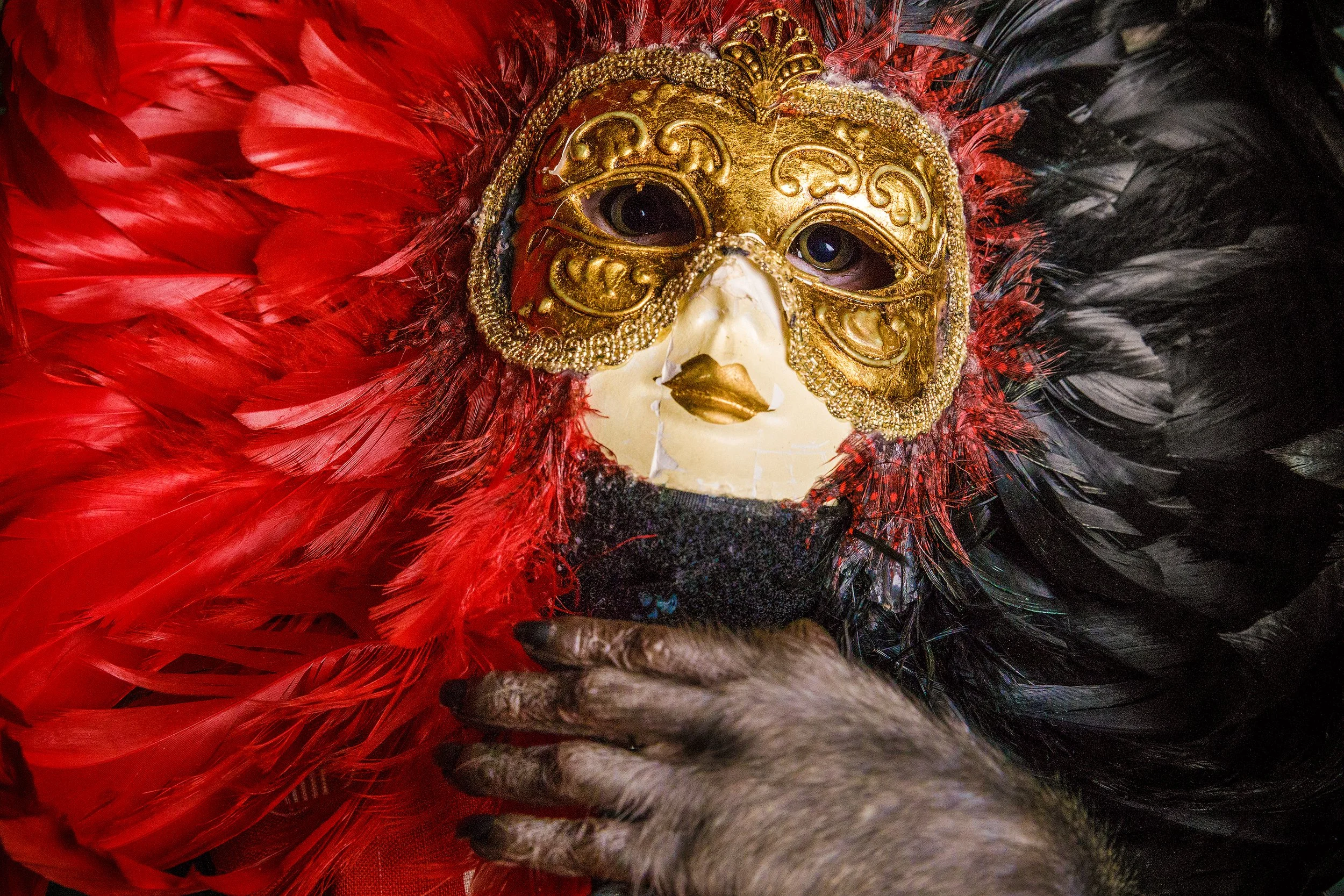
About the word “Animal”
Sometimes a single word shapes the way we see the world. Through photography and encounters across cultures, this essay questions the boundary between humans and animals and the fragile relationship we share with the living world.
Sometimes a single word shapes the way we see the world. There is a quiet assumption hidden in the word animal.
We use it as though it describes something clearly separate from ourselves. The word draws a line through the living world: on one side, humans; on the other, everything else that breathes, hunts, grazes, migrates, or sings.
Most of the time we speak the word without noticing the boundary it carries. Yet the more time I spend photographing the living world, the more fragile that boundary begins to feel.
In different places I have encountered animals in ways that unsettled the certainty of that line. I have listened to stories of elephants regarded as ancestors, of insects woven into seasonal traditions, of birds surviving on the waste of human societies. I have watched creatures move through landscapes shaped almost entirely by people — along roadsides, through cities, across fields and forests threaded with human histories.
Again and again I am reminded that the world does not organize itself according to the categories we give it. Life, instead, unfolds as a web of relationships — often messy, interwoven, and constantly reshaped by the presence of others. The boundaries between lives are far more porous than we tend to imagine.
Yet, our language still draws these boundaries whenever we try to define who we are. In naming ourselves, we inevitably name what we believe ourselves not to be. And in that quiet act of naming things, the word animal begins to suggest separation.
The landscapes I encounter suggest something closer to entanglement. And for much of human history, this entanglement was more openly acknowledged. In many cultures, animals move through stories not simply as inhabitants of nature but as companions, messengers, tricksters, teachers. They appear in myths and rituals not as symbols of distance but as participants in a shared world.
Somewhere along the way, many modern societies began to imagine that the human world and the animal world were different places. Yet the longer I work as a photographer, the more that idea begins to dissolve. Animals continue to live within the environments we create. They adapt to our cities, follow our agriculture, survive within the unintended consequences of our economies. Some disappear as our landscapes change. Others emerge in unexpected ways, occupying spaces we barely notice.
In these encounters, the word animal begins to feel less like a description and more like a question. What does it really mean to draw a line between ourselves and the rest of life? And what happens when that line turns out to be far more uncertain than we imagined?
Photography, for me, has become a way of lingering in that uncertainty. Not to resolve it, but to observe it carefully. To look at the places where human lives and other lives meet — sometimes in conflict, sometimes in coexistence, sometimes in ways that resist simple explanation.
The word animal may suggest distance.
But the longer I look, the more that distance begins to dissolve, revealing something older and harder than language itself; life moving through the same fragile world.
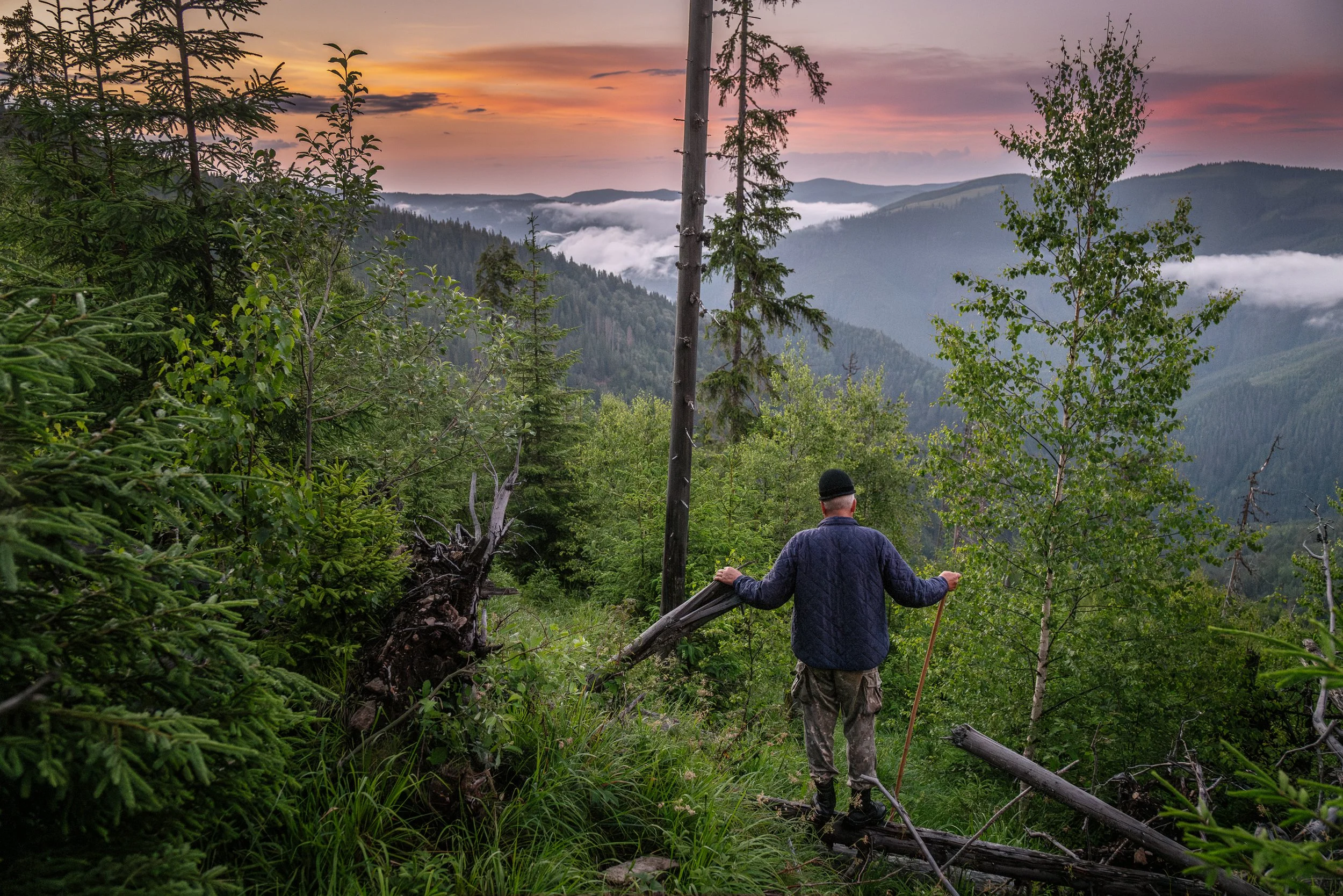
Landscapes of Coexistence
Sometimes coexistence is imagined as a distant ideal. Through photography and field experience, Jasper Doest explores how humans and wildlife already share landscapes shaped by tension, adaptation, and fragile negotiation.
Sometimes we imagine coexistence as a simple idea. A hopeful word used to describe a future in which humans and other species somehow learn to live alongside one another.
At times it is spoken of almost as a kind of utopia — a world where the tensions that divide lives have somehow been resolved. A world where landscapes are no longer shaped by conflict, where borders no longer separate communities, where the forces that drive war, displacement, and poverty no longer determine how people move through the world. From that distance, the idea can feel almost naïve in a world that often seems defined by fracture.
Yet the longer I spend moving through landscapes with a camera, the more I begin to question that assumption. Living together has never meant harmony. It means sharing space despite difference, despite tension, despite the countless ways lives intersect and compete for land, resources, and meaning.
The landscapes we inhabit carry all of this within them. They hold the traces of conflict and adaptation, of displacement and resilience — lives continually negotiating their place in the world. And the more closely I observe these landscapes, the more I realize that coexistence is not something waiting for us in some distant future.
It is already happening.
You can see it in the quiet negotiations unfolding across the planet’s shared terrain. In farmland where elephants cross at night, leaving behind the uneasy balance between subsistence and survival. In forests where predators return to territories from which they were once erased. In cities where birds, insects, and small mammals weave their lives through the infrastructures of human ambition.
These moments are rarely simple. They carry tension and compromise. They reveal the friction that arises whenever lives overlap within limited space. Yet they also reveal something else: an extraordinary capacity for adaptation.
Animals adjust their movements to human rhythms. People alter practices to protect crops or livestock. Communities rediscover older ways of living alongside the creatures that share their landscapes. In some places, traditions that once held these relationships in balance begin to surface again.
What emerges is not a fixed state but a process — a continuous negotiation unfolding across landscapes shaped by both human intention and ecological memory.
Every place tells its own version of that story. Some reveal fragile agreements that have evolved over generations. Others show relationships only recently beginning to take shape, as species adapt to environments transformed by agriculture, urbanization, and industry. Many carry the scars of breakdown, where the balance between lives has been pushed beyond its limits. And yet even there, life persists.
The longer I work as a photographer, the more I begin to see landscapes themselves as archives of these negotiations. They hold the accumulated decisions, beliefs, and practices that determine how lives share space: a fence along the edge of a field, a migration path remembered across centuries, a species returning to territory it once abandoned, a community adapting its traditions to the presence of animals that have always been part of its world. Each of these is a small chapter in a much larger story.
Photography allows me to step into those moments of encounter — not simply to document animals or people, but to observe the fragile relationships that connect them. Sometimes those relationships appear as conflict, sometimes as accommodation, sometimes as a quiet form of tolerance.
In these moments the idea becomes less abstract. It appears in the shape of a landscape, in the movement of a species, in the choices communities make about how they inhabit the places they call home. And perhaps this is where the utopian image of coexistence begins to dissolve. Because living together has never meant the absence of conflict. It has always meant something more complicated — the ongoing effort of different lives to share the same world.
Seen this way, coexistence is not a distant ideal waiting somewhere ahead of us. It is the condition of the landscapes we already inhabit.
Whether we recognize it or not, our lives are woven into the lives of countless other species, and the landscapes we shape continue to shape those relationships in return.
To photograph these landscapes is therefore not only to document the presence of animals or people. It is to witness the subtle negotiations that unfold wherever lives meet. And in those encounters something quietly becomes clear.
We have never lived anywhere else.
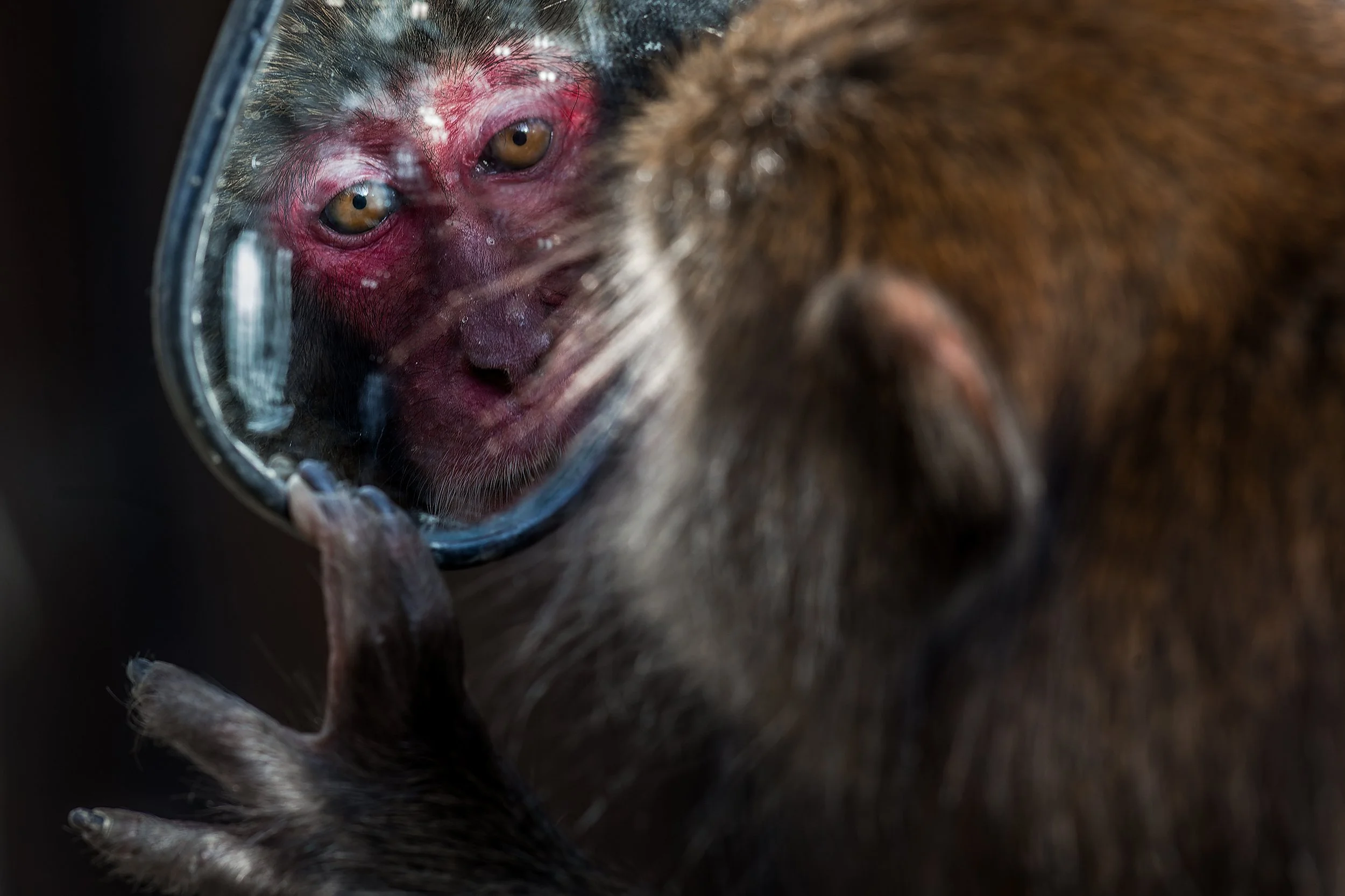
When the Animals Stopped Speaking
There was a time when animals spoke everywhere in human stories.
They spoke in the flicker of firelight and in the patient voices of elders who carried stories from one generation to the next. They appeared as tricksters and teachers, companions and rivals, creatures who carried lessons about courage, greed, patience, or wisdom.
Across cultures and continents, animals once moved freely through the landscapes of human imagination.
A raven could shape the world.
A coyote could outwit the powerful.
A spider could weave stories that explained the origins of life itself.
These creatures were never merely characters. They were ways of thinking.
For much of human history, animals lived not only in forests, oceans, and grasslands, but also in language, ritual, and memory. They appeared in proverbs and dreams. They walked through myths, prayers, and folktales. They gave shape to the questions people asked about survival, morality, and belonging.
To speak of animals was also to speak about the world itself. But slowly, almost imperceptibly at first, something began to change.
As landscapes shifted and species disappeared from everyday life, animals began to retreat from human stories as well. Creatures that once lived alongside villages and fields gradually withdrew from the edges of daily experience.
First from the land. Then, more quietly, from memory.
The stories lingered for a while. But stories depend on presence. They grow from encounters — from the quiet familiarity of knowing that the creatures they describe still move somewhere beyond the edge of the village, somewhere in the forests or along the rivers that shape a community’s world. When that presence fades, something else begins to fade with it.
Today many children encounter animals first through screens rather than through landscapes. Creatures that once shaped the imagination of entire cultures appear as distant icons, simplified characters, or fragments of folklore disconnected from the environments that once gave them meaning. The animal still appears in the story. But the relationship that once sustained that story has grown thin.
In some places the shift is subtle. In others it is profound. Species disappear from ecosystems long before they disappear from language. Yet over time even language begins to adjust, quietly reshaping itself around a world in which fewer animals remain part of everyday life.
What disappears in that process is not only biological diversity. It is a certain way of seeing. For generations, animals helped people understand the landscapes they inhabited. They offered metaphors for human behavior, symbols for cultural identity, and companions in the stories through which communities made sense of the world. When animals disappear from landscapes, those symbolic relationships begin to fade as well.
The silence that follows is difficult to measure. It does not appear easily in statistics or ecological reports. Yet it reshapes the cultural memory of landscapes and alters the ways people imagine their place within them.
In some landscapes this quiet shift becomes visible. Animals that once defined local stories grow rare. Older generations still carry memories of creatures that younger people seldom encounter. Stories that once belonged to everyday life slowly drift toward the realm of legend.
In those places, absence becomes part of the landscape. Not simply the disappearance of animals from ecosystems, but the gradual quieting of voices that once moved through human imagination. And yet the silence is never complete.
Across the world there are still places where animals continue to speak — through stories, through traditions, through the living relationships that communities maintain with the landscapes around them. In those places the old conversations between humans and other creatures have not entirely faded. They continue quietly, carried in ritual, language, and memory.
Perhaps the task before us is not only to protect animals as species within ecosystems. It is also to listen again. To listen for the stories they carry, and for the ways those stories once helped people understand the fragile world they inhabited. Because within those stories lies another way of seeing the world — one in which human lives were never separate from the creatures that shared their landscapes.
And perhaps the moment when animals stopped speaking was not the end of that conversation. Only a long pause.
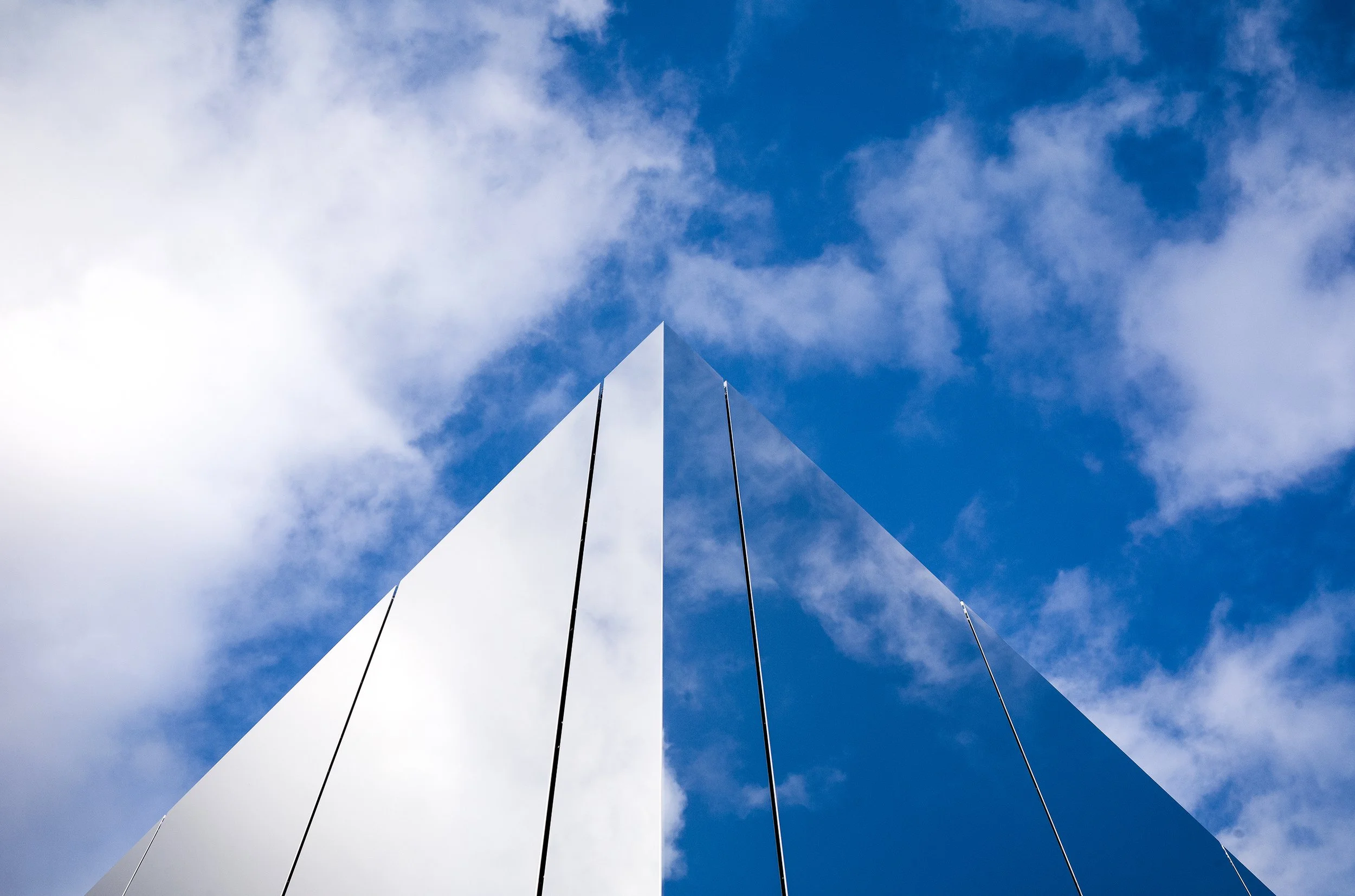
The Illusion of Elsewhere
There is a thought that returns to me from time to time. The idea that the natural world exists somewhere beyond the places where we live.
Somewhere far from cities.
Somewhere beyond roads and buildings.
Somewhere in forests, mountains, and oceans where human presence seems to fade.
This is where we say we are going when we tell someone we are going into nature.
Cities feel quite different from forests. Our agricultural fields do not resemble coral reefs. The environments we build often appear so removed from the living systems around them that it becomes easy to imagine two separate worlds: the human one, and the natural one.
But every now and then a small question begins to surface. What if that separation never truly existed? The thought arrives quietly. Perhaps while noticing a bird navigating the narrow canyon between buildings. Or a plant emerging from a crack in the pavement. Or insects drifting through warm evening air in the middle of a city that never seems to sleep.
Small moments.
Easy to overlook.
And yet they carry a strange implication.
Because if life continues to appear in the very places we imagine as separate from nature, then perhaps the boundary we have drawn is not as solid as it first seemed.
The idea lingers.
If nature truly existed somewhere else, what exactly would that make us? Visitors? Outsiders standing apart from the processes that shaped every other living thing?
The question begins to turn in unexpected directions. Because the more closely one looks, the harder it becomes to locate the boundary that would make such a separation possible.
Every breath exchanges molecules with the atmosphere. The water that moves through our bodies once moved through clouds, rivers, glaciers, and oceans. The carbon that forms our bones once passed through forests, soils, and the bodies of countless other living beings. Even the human body itself turns out to be less singular than we tend to imagine. It is an entire ecosystem, inhabited by trillions of microorganisms without which human life could not exist.
And suddenly the boundary that once seemed so obvious becomes difficult to locate.
Not in the air.
Not in the water.
Not even within ourselves.
Perhaps the idea of nature as something distant says less about the world itself than about the stories we have learned to tell. Stories in which civilization appears to stand apart from the processes that shape the rest of life. Stories in which cities, technologies, and economies seem to belong to a different realm than forests, oceans, and deserts.
But the longer I sit with the question, the harder it becomes to locate that separation anywhere in the world itself. Concrete comes from minerals drawn from the Earth. Electricity flows through systems powered by rivers, winds, and ancient sunlight stored in fossil fuels. Every object that fills modern life ultimately traces its origins back to the same planetary processes that sustain forests and coral reefs.
Perhaps the difference between human landscapes and other ecosystems is not as absolute as it first appears. Perhaps it is simply another form of life rearranging the surface of the planet. And once that realization begins to settle in, another, slightly more unsettling thought follows. If we are not outside the living world, then neither are the things we create.
Cities, industries, and technologies may appear to stand apart from forests and oceans, but they too emerge from the same planetary materials and processes. The minerals beneath our feet become steel and concrete. Ancient sunlight becomes electricity and fuel. The systems we build are not detached from the living world. They are transformations of it.
This does not make the consequences of those transformations any less real — it certainly does not. But it does make the boundary we often imagine between “nature” and “human activity” much harder to sustain. Seen from that perspective, the idea of nature as somewhere else begins to feel less like a description of reality and more like a kind of dream — a way of imagining distance between ourselves and the living world.
But what if that distance was never real? What if the forests we travel to see are not another world, but simply places where the illusion becomes harder to maintain? Places where the deeper continuity of life becomes easier to notice. Because the same atmosphere moves through cities and mountains alike. The same water circulates through rivers, oceans, clouds, and bodies. The same ancient processes of evolution and ecology continue quietly beneath the structures we have built.
Perhaps the living world was never waiting somewhere beyond the edges of human life. Perhaps it has always been unfolding in the same place we have — in the air we breathe, the water that moves through us, the countless living processes that make our existence possible.
If that is true, the idea of nature as elsewhere becomes strangely difficult to locate.
Not on any map.
Perhaps only in the way we have learned to imagine the world.
And once that thought settles in, something shifts.
The possibility appears that we were never standing outside the living world at all.
Which leaves another question behind: perhaps the real question is no longer where nature begins.
But how we choose to live within it.